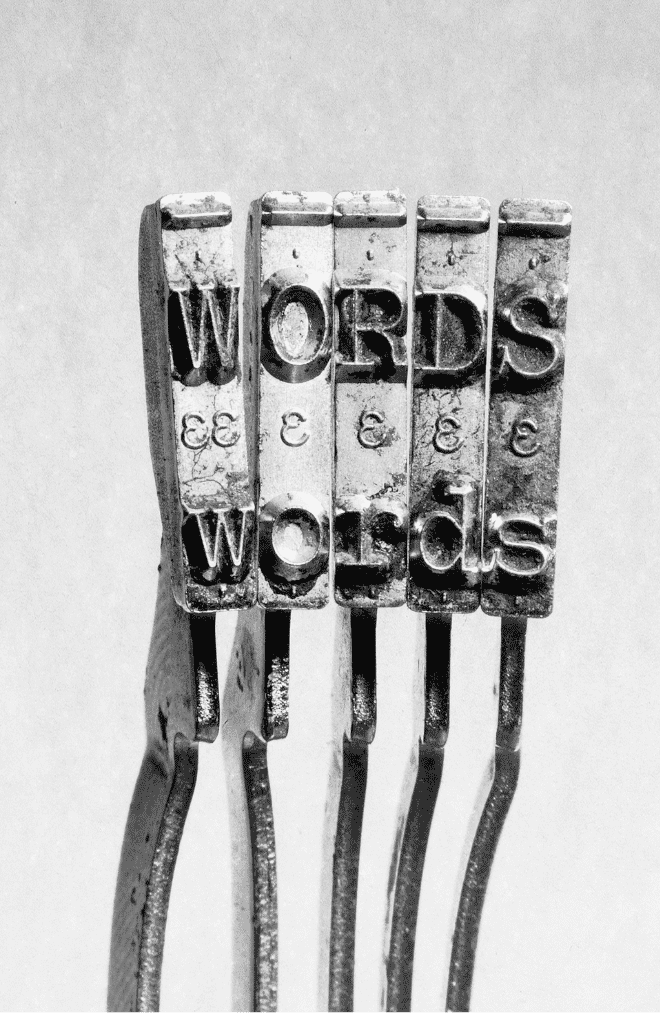
And the reframes that make the difference in the moment
Prefer to listen? Find ep. 167 wherever you get your podcasts.
You’re trying to drink less.
You’re heading out hoping that this time will be different.
And you can’t understand why things aren’t getting better.
I used three words in that opening statement that unknowingly make moderation harder.
Not big fancy, I-need-a-dictionary-for-that words. Normal everyday language that we use without thinking, because they are a part of our long-term mental programming.
And when it comes to drinking, those tiny words often shape the decisions we make in the moment far more than we realise.
Today, we’re borrowing some wisdom from the world of NLP to help you recognise when you might be using your own words against yourself, and the small reframes you can make to take back the power of language on your way to taking back the power of choice from alcohol.
How Can NLP Help Me Drink Differently?
NLP, in case you’ve never come across the term before, stands for Neuro-Linguistic Programming. It looks at the words we use, and how those words frame things in our minds and influence our behaviour.
It matters because what we tell ourselves about our abilities to undertake any task or challenge is half the battle.
And the likelihood is that you don’t really think about the words that you use daily as having a role to play in changing your drinking habits, but after today, you might just be surprised at how often you’re sabotaging yourself without meaning to and without ever realising it.

5 Words to Reframe For Success
1. TRY
As in ‘Tonight, I’m going to try to drink less’.
Yoda said it best, “Do. Or do not. There is no try”
Now, I’m 5ft 7” with small ears, so I’m no Yoda, but I wholeheartedly agree with the little green fella on this one.
Why is ‘try’ such a dangerous word?
I don’t think we realise just how uncommitted to an outcome ‘trying’ makes us.
When we say we’ll try, what we’re really saying is ‘I might fail at this’,
Our brains require certainty. That’s not a personality trait or a character flaw; it’s how we survive. It’s why we don’t like walking over rickety bridges high off the ground. The journey is uncertain, and the brain sees no guaranteed survival in uncertainty.
Instead, tell yourself, ‘I will drink less tonight’
Or better yet, add specificity: ‘I will stop after two drinks tonight’
That sends a message of definite action that’s easy to follow.
And if it does go awry, it gives you something concrete to work on for the next time, rather than just ‘Oh well, I tried’.
2. HOPE / WISH
As in, ‘I hope that I can stick at it this time’
Hope is wishy-washy language. It’s a fantasy that removes all responsibility.
When we say ‘I hope’ or ‘I wish’, we are relinquishing all power over a situation and handing it all over to our old friend the universe to do with it as it pleases.
But you are the architect of your own future, and no amount of wishing or hoping will change anything or give you the outcome you want.
Instead of merely hoping that things will be better this time, our job is to design them to be that way. Even if we only have a small impact, even if there’s only a tiny shift, that alone is far more powerful than all the hope in the world.
Instead, tell yourself exactly where you went wrong last time and make a plan – just one plan, for one moment, when you can do things differently.
Not only will that give you the win you’ve been hoping for, but it will also teach your brain that you have the power to manipulate the outcome to your desire, and that’s a very powerful lesson in changing the way you drink.
3. SHOULD
As in, ‘I should be able to do this by now’.
Stop should-ing all over yourself!
In all types of coaching, whether it’s life coaching like we’re doing now, or business or relationship coaching, whatever it is, there is one thing we all agree on: ‘should’ is the enemy.
Other coaches might not put it quite like that; I can be a little blunt sometimes, but ‘should’ can do one!
There is no should.
Your journey, your path, your life, your goals, your everything is entirely different from everyone else.
And the only reason you’re shoulding your way through this is that you see how easy it looks for other people and you think ‘if he/she/they can do it, then I should be able to do it too’.
No.
You have no idea what goes on when Cindy-Lou Perky-Pants gets off Instagram, or when Jim-Bob-Big-Guns leaves the gym, so there is zero benefit to comparing your life to theirs and thinking you should be doing things differently.
Instead, tell yourself, ‘I am doing this now’
No matter what your ‘this’ is. Whether it’s abstinence, moderation or even some other part of your life – progress beats perfection every time.
And if you don’t believe me, remember there was a time when even the greatest athletes in the world couldn’t swim a mile, swing a bat or stick a landing – baby steps count!
4. BUT
As in, ‘I want to drink less, but I’m going to a wedding next month’.
If these language adjustments are a superpower, the ‘but’ is like their Kryptonite.
(There’s a Sir Mix-a-Lot joke about big butts here but I’m restraining myself.)
But’ is a really impactful way to wipe out everything that you said before it.
- “I love you, but…”
- “You really deserve a promotion, but…”
- “I’m not saying he was right to do that, but…”
“You really deserve a promotion, but…”
“I’m not saying he was right to do that, but…”
And the same effect applies when you use but in your conversation with yourself or with others, about your drinking.
But takes away everything that was said before it, and it also diminishes everything that gets said after it.
Using but makes the two parts of your statement (what you say before but and what you say after it) appear as contradictions and accepts the second part, the easier part, the bit that keeps everything the same, as the truth.
When we use ‘and’, however, we train the brain to see both parts as equally true, and the challenge then becomes how we manage the logistics of the statement, not how to resolve the conflict.
So instead of but, I want you to use ‘and’. ‘And’ gives you autonomy; it allows two things to be true and equal at the same time.
- I want to drink less this weekend, and I’m going to my best friend’s 50th.
- I am going to drink mindfully this summer, and we’re all going on a family holiday.
- I’m practising mindful drinking at the moment, and work is really stressful right now.
With ‘but’, the second parts of those statements completely wipe out the first part.
With ‘and’, both things can be true, and both things can be equal.
5. CAN’T
As in ‘I can’t change the way I drink now, I’m too old’
First off, you are never too old.
The word ‘can’t’ reminds me of that really cheesy meme that was super popular in the coaching/mentoring space a while back, the one that says ‘whether you tell yourself you can, or you tell yourself you can’t, you’re right’.
Now, usually I’m not a fan of such cheesy, easy one-liners that sum up real-life human struggles into one motivational statement, but (do you see what but does here?) in this instance, I have to agree.
Can’t is the ultimate limiting language crux that we all rely on far too readily.
- I can’t change things now, I’m too set in my way
- I can’t moderate, it’s too hard
- I can’t quit, what would my friends say
Or in other parts of your life
- I can’t ask for a pay rise, it’ll be awkward
- I can’t do a 5k run, I’ll be too slow
I can’t do a 5k run, I’ll be too slow
Do you notice how with each of those can’ts they come with an easy and very justifiable excuse to back it up?
It’s like we automatically dismiss the possibility of doing the thing, and then we excuse our reluctance with a very reasonable framing that no one could possibly disagree with.
But what if you could change things? If you could take a shot at what you want, or you could put yourself forward for what you deserve.
At worst, it doesn’t work and nothing changes, and you are no worse off than you are in this very moment. And at best, you get what you want, and life starts to look just that little bit brighter.
So instead of ‘I can’t’, I simply want you to start saying ‘I can’
And if that’s too much of a leap, because I know sometimes these things are easier said than done, then how about ‘What if I can…’
How many possibilities would that open up for you?
It’s Time To Make a Change
I’ll leave you with this: this isn’t about policing your language and berating yourself every time you use a bad word.
We’ve been speaking this way for decades, and the way we speak to and about ourselves is deeply embedded in who we are.
But, we have to start making changes if we want to start making changes.
And supporting your own journey with the language you use is just one of the steps you can take to build the life you want.
So if you find yourself using these words when you speak – try, hope, should, but, can’t – I want you to pause, just for the briefest of moments, acknowledge them, correct them and move on.
This, as with a lot of what we cover, may take a bit of time, but once it starts to stick, you’ll be amazed at how much it can do for you.






Leave a Reply